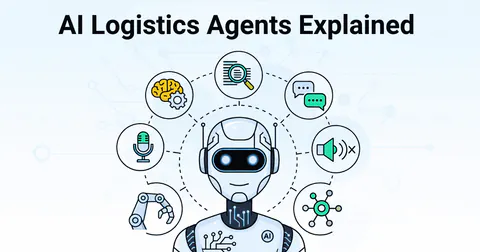
What Are AI Logistics Agents?
What AI logistics agents are, how they differ from rules-based automation, the main agent types, where humans stay in the loop, and the limits to plan for.


Learn what inventory planning is, why it matters, the main models and methods, common challenges like inaccurate data and perishables, and best practices.
What order fulfillment is, each step from receiving stock to delivery and returns, common challenges, the main fulfillment models and how to pick one.
What demand forecasting is, why it matters for your supply chain, short and long-term methods, what drives consumer demand, and how to forecast well.
Why a vague 'out for delivery' alert frustrates customers, what real-time tracking with live maps and updating ETAs looks like, and how to switch.
How GPS tracking improves freight shipping through real-time visibility, better routing, lower costs and stronger security, plus the challenges to plan for.
Learn how GPS tracking helps small businesses manage fleets, plan better routes, cut fuel costs, keep customers updated, prevent theft and stay compliant.
How fleet managers improve driver safety with maintenance, training, telematics, ADAS, fatigue management and rewards, and how fleet software supports it.
Practical fleet management best practices for small businesses: planning, vehicle upkeep, driver management, telematics, compliance, KPIs and replacement.
How GPS tracking can improve productivity, safety and compliance, plus practical ways to balance tracking with employee privacy and outcome-based goals.
Ten ways neurodiverse and dyslexic drivers can strengthen a delivery team, from visual-spatial skills and problem solving to resilience, memory and empathy.
Best practices for keeping delivery drivers safe: hiring and screening, vehicle maintenance, safety policies, telematics coaching and how GPS tracking helps.