5 Benefits of GPS Fleet Tracking for Managers
It’s Monday morning, and you receive a call from an important client who’s upset that a delivery is delayed, again. You quickly call all the drivers, but no one answers their phone. Without GPS fleet tracking, you have no idea what’s going on.
Is there major traffic congestion? Are your drivers running late? Are the drivers on strike?
As the frustration mounts, all you can do is apologize to the customer.
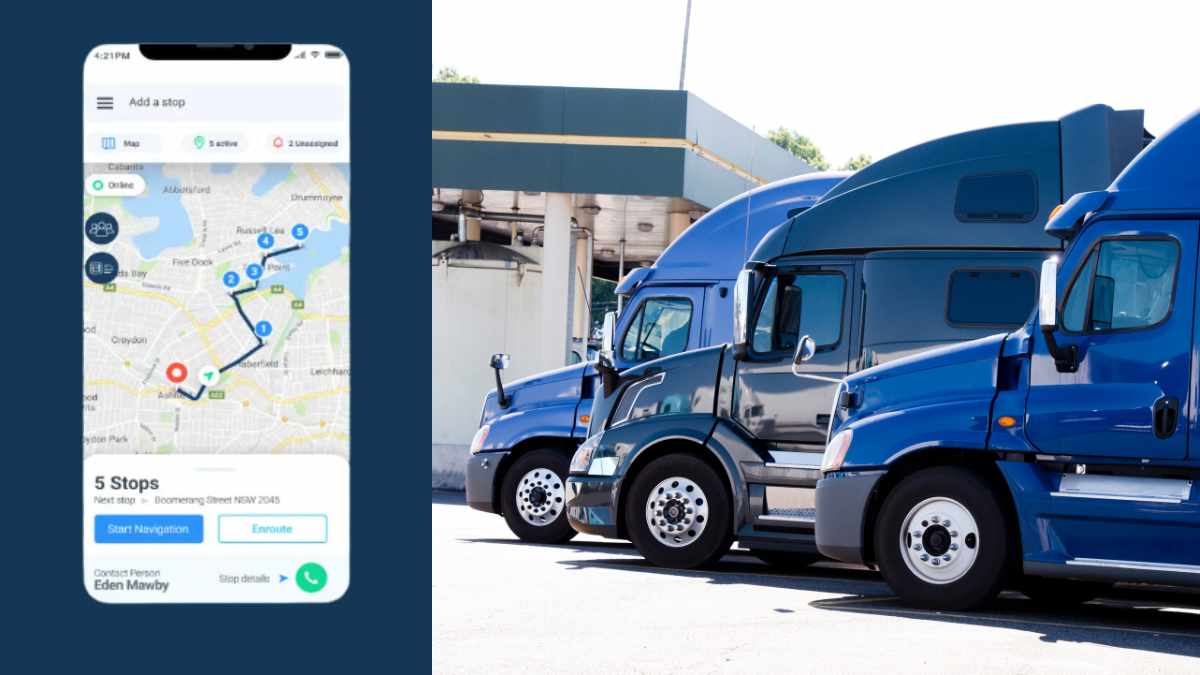
But imagine this same morning, but with GPS fleet tracking. You can easily log into the dashboard and see where each vehicle is in real time. This helps to view the route drivers are taking and the speed.
You inform your customers promptly, and everyone is happy.
GPS fleet tracking is more than keeping organized and knowing where drivers are at any given time of day. Let’s explore how a fleet tracking system can transform the way you manage your vehicles.
GPS vehicle tracking enhances fleet visibility
Real-time tracking helps GPS fleet managers be more productive by giving them a specific view of each vehicle. They can either see how the entire fleet is performing or dig deeper into specifics to establish what’s holding up one specific driver.
Fleet tracking systems can monitor vehicle locations and movements, fuel costs, and delivery times.
With precise vehicle coordinates, you can improve the delivery rate and boost customer satisfaction.
Fleet tracking improves driver safety
As a fleet manager, you want to prioritize timely deliveries, but not at the cost of your drivers’ safety. GPS fleet tracking can provide insights that help you ensure both speed and safety in your operations.
Knowing where each driver is at any given time (especially during late or high-risk hours) enhances safety for both you and your drivers.
GPS fleet tracking helps to monitor the following:
- Driver behavior
- Driver fatigue
- Real-time alerts
And it even helps with analyzing incident reports.
Driver behavior: GPS fleet tracking systems gather data on driving habits, such as speed, acceleration, braking, and cornering.
It has built-in sensors that record when drivers are braking too hard. Managers receive instant notifications if a driver exceeds safe driving thresholds.
Driver fatigue is a significant concern in road safety. In the US, it remains a massive concern. The real number of accidents caused by driver fatigue is widely thought to be underreported.
With GPS tracking, managers know exactly how long a driver has been awake and behind the steering wheel without any breaks.
Real-time alerts will help managers to be notified when a driver is misbehaving. This gives the manager enough time to address the problem on the spot without any delay.
Saving costs with GPS fleet tracking
Fuel is expensive and budgeting for it is hard. After all, it is one of the largest costs in a fleet’s operating budget.
Adding to this, when a delivery driver speeds, fuel consumption goes up.
But how do you reduce fuel costs with fleet tracking?
Two things: route optimization and idle time monitoring.
Fleet tracking reduces fuel costs by looking at real-time data from real-time GPS tracking software to improve the routes drivers are using and how they are driving.
Route optimization
Fleet tracking can analyze traffic patterns, road conditions, and distances. It creates the most efficient route with route optimization.
It saves fuel costs and delivery time.
Read more on route optimization: How does route optimization work and why is it essential?
Idle time monitoring
Drivers don’t always realize how much fuel is used when they are idling, waiting for a parcel to be dropped off in a building or at a house.
A fleet tracking system can help managers assess exactly where drivers are idling and for how long. Fleet managers can alert drivers to reduce idling time and cut down on fuel waste.
Fleet tracking solutions optimize route planning
GPS fleet management is all about knowing where your drivers are. On a live map, fleet managers know exactly where their fleet and drivers are.
However, using any route will not be efficient for business operations. You want to use the smartest routes.
Route optimization helps improve fleet performance. If a manager notices a driver is not following instructions, it can be easily resolved.
Without GPS fleet tracking devices, a driver might tell you he is using the smartest route, but in real life, he’s not. Fleet management solutions will immediately pick up this error.
GPS fleet management increases productivity
With the right fleet management software, tracking each driver’s GPS location creates accountability.
When drivers know they are being monitored, they perform better and are more productive. They want to impress their fleet manager.
GPS fleet management also makes the dispatch process much more efficient. Knowing where the fleet is, a manager can easily redirect a vehicle if a new order comes in.
The final journey: GPS fleet tracking improves overall performance
With these GPS tracking benefits, it’s easy to improve fleet operations and keep staff motivated to improve their delivery rates.
When drivers know they are being monitored with fleet metrics, overall compliance is easy. Fleet managers can eliminate fuel theft, improve customer satisfaction, and reduce operating costs.
NOW READ: 5 Ways Fleet Management Software Can Boost Fuel Efficiency
Related Articles
Real-Time Tracking Myths That Hold Fleets Back
Three real-time tracking myths debunked: that it is surveillance, too costly to set up, or unreliable, plus a practical plan to roll tracking out to your fleet.
8 Ways to Cut Fleet Maintenance Costs
Eight ways fleet management software cuts maintenance costs, from predictive maintenance alerts and route optimization to driver monitoring and training.
5 Ways Fleet Management Software Cuts Fuel Use
How fleet management software improves fuel efficiency through smarter routes, driver behavior coaching, less idling, preventative maintenance and telematics.